The Complete Guide to Hiring at a Virtual Job Fair
Everything an employer needs to know to recruit, screen and hire at a modern virtual career fair — costs, booth setup, ROI playbooks, FAQs and city-by-city directories.
Trusted by employers, universities and governments worldwide
1. Why virtual job fairs work for employers in 2026
Virtual career fairs are no longer the pandemic-era stopgap they were in 2020. In 2026 they are the default recruiting channel for a large share of employers in healthcare, tech, hospitality, finance and government adjacent hiring. The reasons are simple: lower cost, larger reach, faster time-to-conversation, and better measurable ROI than either in-person fairs or generic job boards.
Cost: virtual vs in-person
Cost element
In-person career fair
Virtual career fair
Booth / event fee
$1,500 – $5,000
$150 – $500
Booth materials & shipping
$500 – $2,000
$0
Staff travel (2-4 recruiters)
$1,500 – $4,000
$0
Hotels & meals
$800 – $2,500
$0
Printed collateral, swag
$300 – $1,500
$0
Lost productivity (2 travel days × 3 staff)
~$3,000
$0
Total per event
$7,600 – $18,000
$150 – $500
For a recruiting team that runs 6 to 10 events per year, switching even half of them to virtual translates into $40,000 to $100,000 in annual savings — without losing the live conversations that make career fairs work.
Time investment
An in-person career fair eats roughly 18 to 24 hours per recruiter: pre-event setup, travel, setup-day, event-day, teardown, return travel and follow-up. A virtual fair eats 6 to 9 hours per recruiter end to end. That is roughly a 3× efficiency multiplier for the same number of qualified conversations.
Quality of conversations
Conversations are typically shorter at virtual fairs (5 to 10 minutes vs 8 to 15 minutes in-person) but the total volume per recruiter per hour is higher. A focused booth team can run 30 to 60 qualified conversations across a 4 to 6 hour virtual event, against 12 to 25 at an in-person fair of the same duration.
2. What a modern virtual job fair looks like
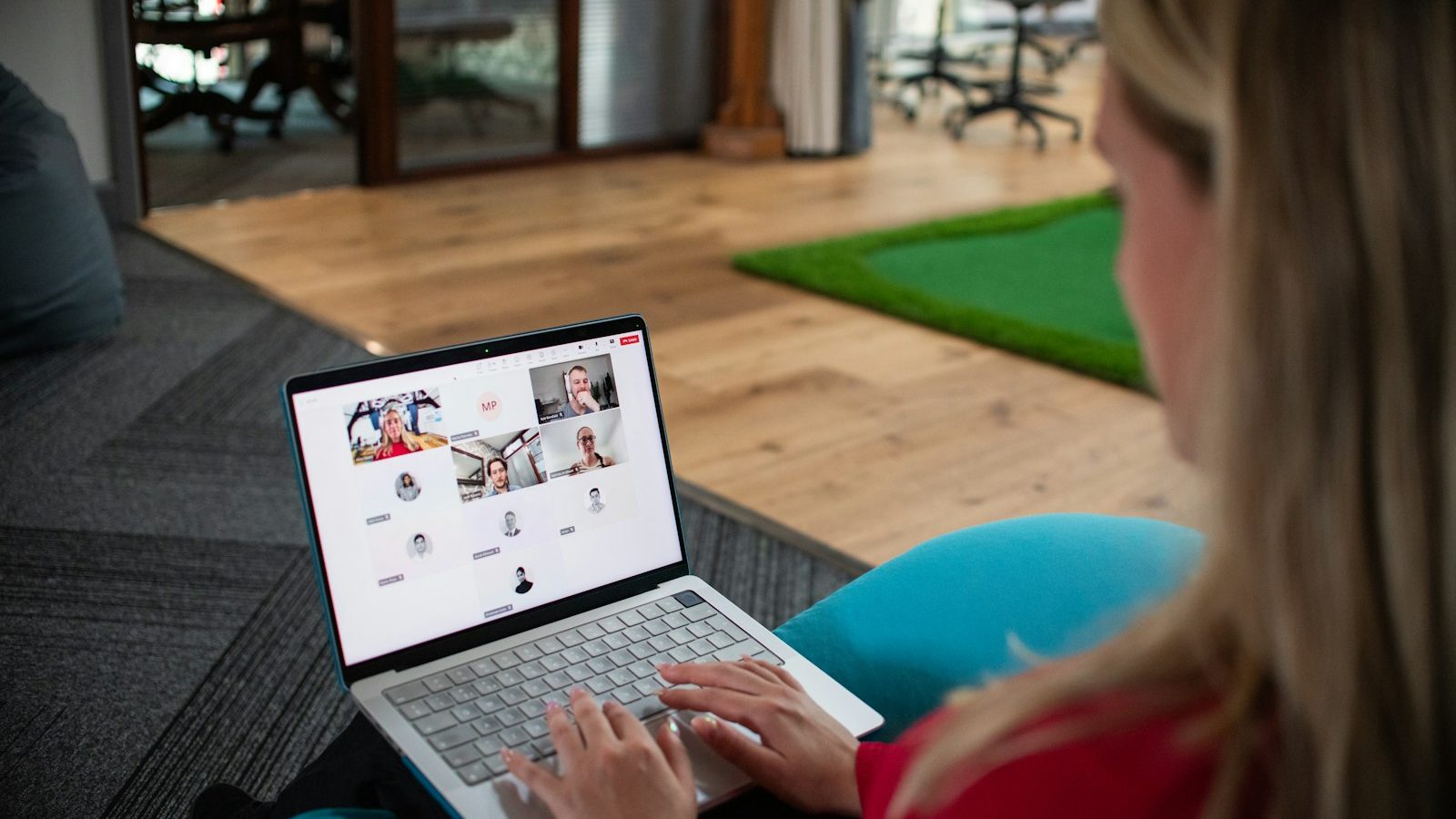
If you have not exhibited at a virtual fair since 2020 or 2021, the format has evolved significantly. The current standard, used by platforms like EasyVirtualFair, looks like this:
Booth anatomy
Branded landing — your logo, brand color, hero image, 1 to 2 minute video, company description and call to action
Jobs feed — live list of open positions imported from your ATS or pasted manually
Resume drop — candidates upload a CV with one click; you get notified and can mark as hot/warm/cold
Live chat queue — incoming text-chat requests with candidate profile preview before you accept
Live video chat — escalate any chat to video without leaving the booth
Recruiter panel — multiple staff can answer chats in parallel; lead recruiter sees the whole team queue
Candidate flow
Candidate registers for the event and creates a short profile (role target, location, skills)
On event day they enter the lobby and browse booths by category
They visit your booth, watch your video, view jobs and either drop their resume or request a chat
Your recruiter accepts the chat, does a 5 to 10 minute screening conversation, escalates to video if hot
You flag hot candidates inside the dashboard; they automatically appear in your post-event report
3. Before the event: preparing your team
Booth setup checklist (allow 30 to 60 minutes the week before)
Upload your logo (high resolution, transparent background)
Set brand colors and hero image (1200×630 recommended)
Add company description (150 to 300 words — sell the team, not the company)
Upload a 1 to 2 minute recruiter video (informal beats corporate every time)
Import or paste 3 to 8 active job openings — fewer, better written, beats long lists
Configure auto-response message for after-hours chats
Test the booth on mobile (most candidates check from a phone first)
Job descriptions to publish
The job descriptions you bring to the fair should be short and conversation-ready. Avoid the usual 800-word formal posting. Use a structure like:
Role title and 1-line summary
3 to 5 bullet points about what the person actually does day-to-day
Required skills (clear, not aspirational)
Salary range (transparency converts much better)
Location flexibility (remote, hybrid, on-site)
Team training
Run a 30 minute mock event with your team the day before. Walk through: the booth dashboard, accepting incoming chats, the 5-minute screening script, when to escalate to video, how to flag a hot candidate. The first 60 minutes of any real event are by far the busiest — your team needs to be on autopilot.
4. During the event: maximizing conversions
The 5-minute rule
Limit each chat to 5 to 10 minutes during peak hours. The goal of the conversation in-booth is to qualify and schedule a follow-up, not to fully interview. If a candidate is clearly a fit, book a longer slot for the same week and end the chat. If they are clearly not a fit, thank them and move on quickly.
Hot vs warm vs cold
Tag
Action during event
Action after event
Hot
Video call now (10-15 min)
Calendar link sent within 1 hour
Warm
Take resume + ask for a follow-up time
Calendar link sent within 24 hours
Cold
Thank them, take the resume anyway
Generic thank-you email + add to talent pipeline
Parallel queues
If your team has 2+ recruiters, run parallel chat queues from the same booth. The booth lead manages overflow and assigns difficult conversations. This single tactic typically doubles total conversation count for the same staff.
Using analytics in real time
Modern booth dashboards show you, live: booth visits, chat queue length, candidates by job match, conversation duration. Use this to redirect staff to the hottest queue and to spot if your booth is being skipped (often a hero image or job-description issue you can fix mid-event).
5. After the event: turning chats into hires
The 24 hours after the event are when most virtual fair ROI is won or lost. Candidates lose interest fast — and your competitors will be following up.
24-hour follow-up
Send a thank-you email to every booth visitor, even cold ones — they are tomorrow's pipeline
For hot candidates, send a personalized email with a calendar booking link for that same week
For warm candidates, send the same plus a link to the full job description and a couple of resources about your company
ATS integration
Export your resume drops into a CSV and import into Workday, iCIMS, Greenhouse, Lever or BambooHR. EasyVirtualFair offers direct API integrations for the top systems on enterprise plans. For most teams a manual CSV import the morning after the event is fast and reliable.
Measuring ROI
Track these four metrics across every fair to know what is working:
Cost per conversation — booth cost ÷ total conversations
Cost per qualified candidate — booth cost ÷ (conversations × your qualified rate)
Cost per scheduled follow-up — booth cost ÷ scheduled second interviews
Cost per hire — total program cost ÷ hires made from the program
For most healthy programs, cost per hire from a well-targeted virtual fair lands between $50 and $400 — significantly below LinkedIn Recruiter and on par with strong employee referral programs.
6. Costs and pricing
Booth pricing depends on the event size and the package level. As a current benchmark, the KLIRI Career Tour sets booth prices at $150 (standard) to $500 (premium) for its city-based virtual fairs — a fraction of what an in-person booth would cost. National multi-day events and enterprise platforms are typically higher. University recruiting events are sometimes free for employers, with a per-resume or per-conversation charge.
Virtual job fair vs Indeed virtual events
Indeed virtual events are limited to Indeed-sourced traffic and lack live video chat in most packages. They make sense if your audience is already on Indeed and you only want resume volume. They do not make sense if you want city-, sector- or audience-targeted conversations with pre-registered candidates.
Virtual job fair vs LinkedIn Recruiter
LinkedIn Recruiter is excellent for outreach to passive candidates but expensive ($10,000+ per seat per year) and slow — most cold InMails go unread. Virtual fairs put your team in front of candidates who have already opted-in to talk to employers, which is a fundamentally different funnel.
Virtual job fair vs in-person career fair
Already covered in chapter 1. Summary: virtual is roughly 5× cheaper, 3× more time-efficient, and reaches a broader candidate base. In-person still wins for very senior or culture-fit-driven hiring rounds.
7. Industry-specific tips
Tech
Run a quick technical screen inside the chat for promising candidates — most platforms support shared HackerRank or CoderPad links. Filter candidates by stack and seniority before inviting to chat. Philadelphia tech, DC tech, Miami tech and Tampa tech are good starting points.
Healthcare
Make sure the platform supports HIPAA-aware video (no recording by default, no PHI storage). Candidates self-tag license, BLS/ACLS and specialty. Conditional on-the-spot offers are common. See Philly healthcare, Miami healthcare and Tampa healthcare.
Government contractors
Filter by clearance level (Public Trust, Secret, TS, TS/SCI), agency experience and US Persons status. Post-2025 federal layoffs created a deep pool of cleared talent — particularly in the DC region. See DC government contractors.
Finance & professional services
Use license filters (Series 7/63, CFA, CPA). Verify candidate confidentiality settings — many candidates do not want their current employer disclosed. Philadelphia finance and Tampa finance are strong city options.
Hospitality
Conditional on-the-spot offers are the norm. Use seasonal filters (winter ramp, summer ramp). Bilingual filtering is critical in markets like Miami. Miami hospitality is the standout option.
Nonprofit
Ask the organizer about nonprofit discounts. Filter by program area (climate, health, international, advocacy). Salary transparency expectations are strong in the nonprofit sector. DC nonprofit is the best US option for national nonprofit recruiting.
8. Upcoming virtual job fairs by city
The KLIRI Career Tour runs city-based virtual job fairs across the US, powered by EasyVirtualFair. Each event is timed for late summer and fall hiring cycles, with pre-registered local talent and booth pricing from $150.
How much does it cost to recruit at a virtual job fair?
At city-based events like the KLIRI Career Tour, booth packages range from $150 (standard) to $500 (premium) per event, including a branded virtual booth with up to 3 recruiter seats, jobs feed, live video chat and resume drops. National multi-day events and enterprise platforms can be higher.
Is a virtual job fair cheaper than an in-person career fair?
Almost always, yes. An in-person career fair booth costs $1,500 to $5,000 just for the booth fee — before adding travel (2 to 4 staff), hotels, shipping booth materials, printed collateral and team time. A comparable virtual booth costs $150 to $500 and eliminates travel, shipping and most setup time. Most employers report a 90%+ reduction in cost-per-conversation.
How many candidates will I actually speak to at a virtual job fair?
Active booth conversations per event range from 30 to 120 depending on booth visibility, event traffic and how proactive your team is. The most successful exhibitors split their team into 2 to 3 parallel chat queues so they can run multiple 5 to 10 minute conversations simultaneously.
What kind of candidates show up at virtual career fairs?
On well-targeted events (city, sector, university), the majority of attendees are already actively looking or open to a new role. Quality depends heavily on how the event was marketed — local audience targeting beats generic national fairs every time. Ask the organizer for the registration breakdown by experience level, role and intent.
Do I need any technical setup to run a virtual booth?
No. Modern virtual career fair platforms run entirely in the browser. There is nothing to install for you or your candidates. You set up your booth (logo, jobs, videos, description) in 30 to 60 minutes the week before the event.
How do candidates interact with my booth on the day?
They visit your booth like a physical one — browse your jobs and content, watch your video, then either drop their resume or request a live chat. Your team sees an incoming chat queue and accepts conversations one at a time, just like a live support tool.
Can I run video interviews during the fair itself?
Yes. Live video chat is supported in most modern platforms. The standard flow is: short text chat first to qualify, then escalate to video for a 5 to 15 minute conversation. You can also schedule a longer follow-up after the event.
How does the platform integrate with my ATS?
Most resume drops can be exported as a structured CSV that imports into Workday, iCIMS, Greenhouse, Lever, BambooHR and similar systems. Some platforms (EasyVirtualFair included) offer direct API integrations for Workday and Greenhouse on enterprise plans.
Are virtual job fairs good for technical hiring?
Yes — when paired with live screening tools. The best exhibitors run a 5 minute conversation in-booth, then send a quick coding exercise via HackerRank or CoderPad inside the chat for promising candidates. This significantly speeds up technical funnels.
How long should our team spend at a virtual job fair?
Most events run 4 to 8 hours. Expect 2 to 3 of your recruiters to be active the entire time. For peak hours (typically the first 2 to 3 hours after event open), have your full team online. After the peak, 1 to 2 people can monitor the booth while the rest follow up on early conversations.
What follow-up should I do after the event?
Send a thank-you email to every booth visitor within 24 hours. For candidates you flagged as 'hot', send a calendar booking link for a deeper interview that same week. The 24 hour window is where most virtual fair ROI is won or lost — candidates lose interest fast if you wait longer.
Can virtual job fairs replace in-person career fairs entirely?
For most use cases, yes — especially mid-funnel and high-volume hiring (entry-level, healthcare, hospitality, IT, sales). For executive search, government cleared roles requiring in-person assessment, and very specific cultural fit interviews, in-person still has a place. The best programs run a hybrid — virtual for breadth and screening, in-person for final-round.
Ready to recruit at your first virtual job fair?
Book a 20-minute walkthrough with our team. We'll show you the platform and help you pick the right event for your hiring goals.