How to Choose a Virtual Recruitment Fair Platform: 2026 Checklist
A 5-step decision framework for choosing a virtual recruitment fair platform — from defining event format to procurement and timeline. Includes a 15-question demo checklist.
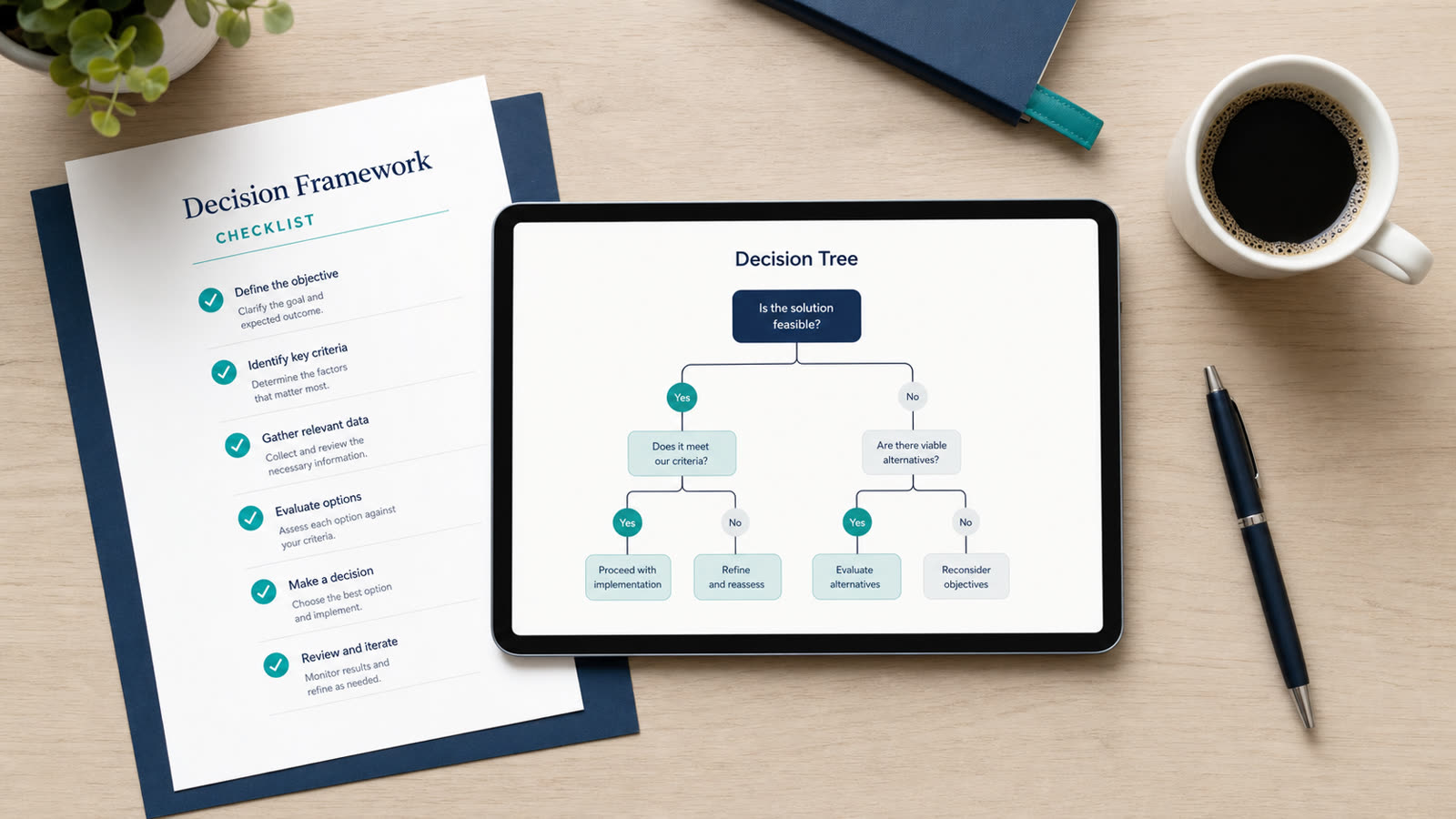
Choosing a platform is a strategic decision, not an operational one
Most teams approach the choice of a virtual recruitment fair platform as a tactical procurement: shortlist three vendors, run demos, pick the cheapest. That works for stationery. For a platform that will run 6+ hours of live recruiter-candidate interactions and represents your organization to thousands of job seekers, it is the wrong frame.
This checklist walks you through five strategic steps — from defining the event format to procurement — so the platform you pick is the one your operations team renews next year.
Step 1: Define the event format
Before you talk to any vendor, lock down the format. Each one drives different platform requirements:
- Single-day, single-region. Lowest bar. Most platforms can handle this.
- Multi-day, single-region. Needs persistent candidate accounts and on-demand content.
- Single-day, multi-region. Needs timezone-aware UX, multilingual content, regional CDN.
- Always-on (year-round). Needs scheduling, candidate pre-qualification flows, and persistent employer booths. Few platforms do this well.
- Hybrid (virtual + in-person). Needs the platform to coexist with badge scanning, on-site check-in and a unified candidate database.
Step 2: Stakeholder requirements
Run a 30-minute working session with one representative from each stakeholder group. Their requirements drive the must-haves:
Recruiters (employer side)
- How many candidates can I chat with per hour?
- Can I tag candidates as I talk to them?
- Can I see resumes before the chat starts?
- Can I push qualified leads to my ATS during the event?
Employers (decision-maker side)
- Can my booth match our brand?
- What metrics will I get post-event to justify the spend?
- How long does booth setup take my team?
Candidates
- Can I join on my phone?
- Do I need to download anything?
- Is the platform accessible (screen reader, keyboard nav, captions)?
- How long does the average chat wait?
IT / Security
- Where is candidate data stored?
- SOC 2, GDPR, FERPA, HIPAA — which apply?
- What is the breach notification SLA?
- SSO support for our identity provider?
Step 3: Technical must-haves
| Requirement | Why it matters |
|---|---|
| Browser-based, no installs | Drop-off on downloads exceeds 40% |
| Mobile-first responsive UI | 60%+ of candidate traffic is mobile |
| Native WebRTC video | Latency, quality, no third-party redirects |
| GDPR / Section 508 / VPAT | Non-negotiable for public-sector and EU organizers |
| Regional CDN coverage | Video latency matters per region |
| API + webhooks documented | Real integration, not vaporware |
| 99.9% uptime SLA with credits | Without credits, the SLA is not a commitment |
Step 4: The 15-question demo checklist
Take this list into every demo. Vendors who can answer all 15 without "let me get back to you" tend to be the ones that survive contact with production.
- Show me the candidate journey from email invitation to first chat — on mobile.
- What is your event-day SLA, and what credits apply if it is breached?
- Show me your VPAT and the WCAG 2.1 AA conformance report.
- What is the median wait time for a candidate to be picked up by a recruiter in your busiest fairs?
- Walk me through booth setup as an employer — start to finish, without help.
- Show me real analytics from a recent fair, with the customer name redacted.
- How do recruiters push a qualified candidate to my ATS during the event?
- What happens to private chat history after the event? Where is it stored, who can access it, for how long?
- How does your platform behave when 2,000 candidates join at the same minute?
- What integrations are live in production today (not roadmap)?
- What is the cost of an additional booth beyond my plan?
- What is the cost of a webinar session, if not included?
- Show me how candidates with disabilities navigate a booth.
- What is your customer churn rate? (Vendors who do not know are a flag.)
- Can I talk to a current customer of similar size and use case?
Want this list as a printable PDF? Request a demo and we will send you the checklist along with our own answers to each question.
Step 5: Procurement and timeline
Most virtual fair contracts close in 4-8 weeks for mid-market and 8-16 weeks for enterprise. Build your procurement timeline backwards from event date:
- T-12 weeks: Vendor shortlist locked, demos scheduled.
- T-10 weeks: Demos complete, finalist selected.
- T-8 weeks: Contract negotiated, SLA + data processing addendum signed.
- T-6 weeks: Branding + setup begins, integrations configured.
- T-3 weeks: Employer booth onboarding opens, marketing launches.
- T-1 week: Full dress rehearsal with employer representatives.
- Event day.
If a vendor is pushing a "ready in 2 weeks" timeline for an enterprise event, they are over-promising. If you have less than 6 weeks for a mid-market event, simplify scope rather than compress quality.
FAQ
What is a virtual recruitment fair?
A virtual recruitment fair is a structured online event where multiple employers ("booths") and candidates interact synchronously through video chat, text chat and webinars over a fixed time window — typically 4–8 hours. It is distinct from job boards (passive, asynchronous) and from one-off webinars (one-to-many).
How do I evaluate platforms for a virtual job fair?
Use the 5-step framework above: define format, gather stakeholder requirements, screen for technical must-haves, run the 15-question demo checklist, then build a procurement timeline backwards from the event date. Skip the "feature matrix" approach — every platform claims the same features.
What is the typical timeline from vendor selection to event?
4–8 weeks for mid-market, 8–16 weeks for enterprise. Mid-market events under 6 weeks should reduce scope (fewer integrations, default branding). Enterprise under 8 weeks should usually be deferred.
Should I include a pilot event in the contract?
Yes, especially for multi-year deals. A pilot event — even a small one — surfaces operational gaps that demos hide. Negotiate the pilot price as credit against the main contract, not as a separate fee.
What is the difference between virtual job fair software and virtual recruitment fair platform?
In practice, the terms are interchangeable. "Software" emphasizes the product. "Platform" emphasizes the ecosystem of integrations, branded fairs and analytics. Buyers use both. Vendors who position as "platform" usually have broader integrations; "software" vendors are sometimes more focused on the event itself.