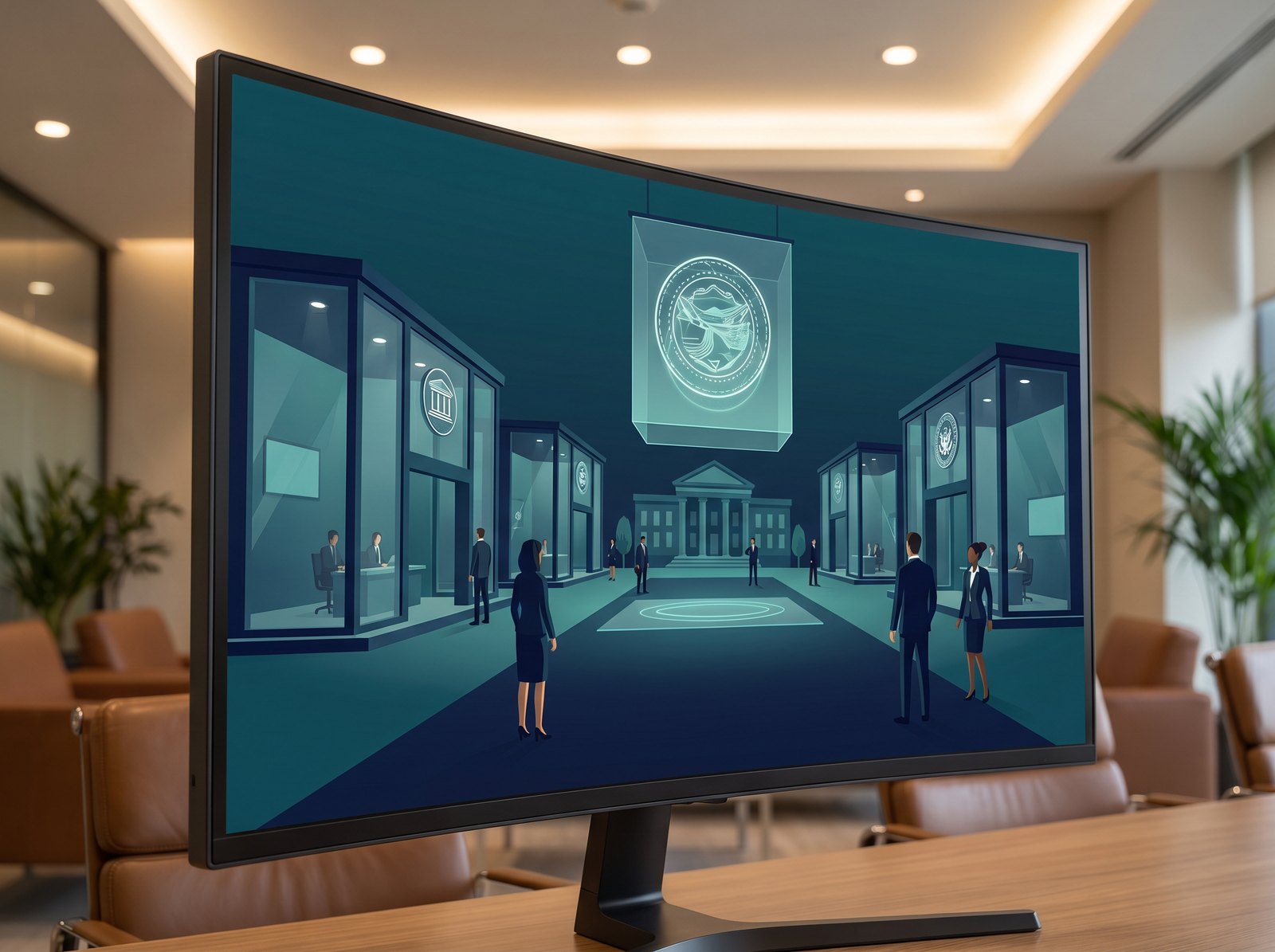
State DOLs, Workforce Development Boards, school districts and municipalities use EasyVirtualFair to serve their constituents with inclusive, accessible, mobile-first virtual career fairs — from Georgia DOL to NY State of Opportunity.
Local workforce development boards (LWDBs), state workforce agencies and American Job Centers exist for one core reason: to connect job seekers with employers in their region, especially populations facing barriers to employment. The traditional way to do that — an in-person hiring event at the AJC, a job fair at the community college, a regional employer expo in a hotel ballroom — is expensive, geographically limited and excludes large categories of the people the system most needs to serve: rural residents, parents without childcare, people without transportation, workers in a second shift, people with disabilities, and English-language learners.
A virtual hiring event changes the math. The same staff can run an event that reaches every county in the workforce area, on any device, in multiple languages. The same dollar buys 5–10× the participant reach. According to the National Association of Workforce Boards (NAWB), there are more than 570 workforce development boards across the U.S., representing the on-the-ground delivery layer of the Workforce Innovation and Opportunity Act (WIOA) — and virtual delivery is increasingly central to how those boards meet their performance obligations.
EasyVirtualFair powers virtual hiring events for workforce boards, state labor departments, county employment agencies and economic development organizations across the United States and abroad. This guide explains how the platform fits the workforce mission, with sourced numbers, use cases, compliance notes, procurement pathways and real examples.
WIOA, AJCs and the U.S. workforce system at a glance
The federal-state-local workforce system is large, decentralized and under constant performance scrutiny. A quick map of the system, with sourced figures:
570+U.S. workforce development boards (NAWB)
~2,400American Job Centers nationwide (DOL)
$3.4B+Annual WIOA Title I formula funding (federal)
Macro context: the U.S. staffing and workforce solutions industry employed about 11 million workers in 2024 across nearly every sector — meaning the demand side (employers hiring at workforce board events) is broader and more digitally-native than ever.
Seven use cases for state and local workforce agencies
1. Recurring monthly or quarterly hiring events
Many workforce boards run a regular cadence — first Tuesday of every month, or quarterly regional events. A virtual format means staff time per event drops dramatically, freeing case managers to focus on participant placement rather than event logistics.
2. Industry-specific hiring drives
Manufacturing day, healthcare hiring week, construction trades fair, hospitality recovery event. Industry-themed virtual events let boards align with employer demand and workforce board sector strategies.
3. Veteran and military spouse hiring events
Veterans and military spouses are explicit priority populations under federal workforce policy. A virtual format is especially well-suited because military families relocate frequently and may not be physically in the region when an event happens. Career fairs for government and public sector covers this in depth.
4. Apprenticeship and Registered Apprenticeship outreach
Registered Apprenticeship programs are a federal priority and a workforce board performance metric. A virtual "Apprenticeship Expo" with employers, intermediaries and trade unions gives job seekers a structured way to compare programs in a single afternoon.
5. Reentry and second-chance hiring events
For workforce boards serving justice-involved populations, a virtual event reduces stigma and transportation barriers. Privacy controls let employers signal "second-chance employer" status without making it visible to other employers at the event.
6. Dislocated worker rapid response
When a major employer announces layoffs, federal Rapid Response funds flow to the local board to support dislocated workers. Standing up a virtual hiring event within 5–7 days of layoff notice puts new employers in front of affected workers immediately — a measurable improvement over the typical 4–6 week timeline for in-person events.
7. Regional cross-board collaboration
Adjacent workforce boards increasingly co-host events. A virtual format makes joint events trivial: each board has its own branded lobby section, employers from all participating regions appear in a single event, and participants can attend from anywhere. State workforce agencies often coordinate these at the regional level.
Talk to an EVF specialist about your workforce events
We've supported workforce boards from Texas to New York to Mississippi. Demo includes a procurement walk-through.
WIOA, EEOC and Section 508 compliance considerations
Public-sector virtual events have to clear compliance hurdles that private events don't. Three matter most:
Section 508 / WCAG 2.1 AA accessibility. Federal agencies and federally-funded programs must offer events that are accessible to people with disabilities. EasyVirtualFair is browser-based, keyboard navigable, screen-reader compatible, and tested against WCAG 2.1 AA. Captions are available for all live webinar content.
EEOC and equal opportunity. Workforce-funded events must be equally accessible to all protected categories. A virtual event with on-demand session recordings, multilingual support and mobile access typically exceeds EEOC requirements for equal access — better than a physical event held in a single location during business hours.
Data privacy and PII handling. Job seeker data collected at a workforce event is often considered participant data under WIOA reporting. EasyVirtualFair signs Data Processing Agreements with public sector clients and supports data residency requirements when needed.
For more detail on platform compliance, see our security page.
Performance metrics and federal reporting
Workforce boards report against Common Measures and WIOA Title I performance indicators. The metrics from a virtual event that feed into those reports include:
Metric
Why it matters
EVF benchmark
Job seekers registered
Direct count for participant reporting
200–2,000 per regional event
Job seekers attended
WIOA-eligible participant interactions
55–70% of registrants
Employers participating
Business services performance
15–80 per event
Open positions advertised
Real-time labor demand snapshot
5–25 per employer booth
1-on-1 employer conversations
Pre-employment interactions
2–5 per registered seeker
Hires within 90 days
WIOA "entered employment" indicator
10–18% of attendees
Cost per participant served
Grant cost-effectiveness
$1–$5 on virtual vs $20+ in-person
11-point checklist for a county or state hiring event
Select dates avoiding federal holidays, school breaks and AJC closure dates.
Build employer outreach list across priority sectors (manufacturing, healthcare, trades, public sector).
Co-design the lobby with your board's branding, partner logos and any required compliance language.
Configure booths with job postings, application links, and any required EEO language.
Launch participant outreach via AJC staff, partner CBOs, school districts, libraries, social media.
Brief employers and ensure all booths meet accessibility standards (captioned video, alt text, etc.).
Run the event with AJC staff on standby for participant tech support — many boards offer "co-attendance" stations at the AJC.
Pull reports within 5 business days; feed into participant records and WIOA performance dashboards.
How workforce boards are using EasyVirtualFair
A multi-county workforce board in the southwest ran a quarterly virtual hiring event series: 45 employers, 1,200 job seekers per event, average cost-per-seeker of $2.10, with 14% reporting employment within 90 days.
A state-level workforce agency used the platform for a dislocated worker rapid response after a large manufacturing layoff: 18 employers stood up within 9 days, 580 dislocated workers attended, 41% had at least one employer follow-up interview within 30 days.
A workforce board serving rural counties ran a recurring monthly "Always Hiring" virtual event with rotating sectors — healthcare in January, construction in February, manufacturing in March — reaching residents in towns where the nearest AJC is 90 minutes away.
An economic development corporation in the Midwest used EVF to host a "Region in One Room" hiring event tied to a state-level economic development announcement, with 60 employers across 5 sectors and 2,400 job seekers.
Budget, procurement and grant funding sources
How workforce boards typically pay for virtual events:
WIOA Title I formula funds — Allowable for business services and employer engagement activities.
Wagner-Peyser Employment Service — Funds labor exchange activities, including hiring events.
Rapid Response funds — For dislocated worker events tied to layoff announcements.
State workforce funds — Many states fund virtual platforms at the state level for use by all LWDBs.
Employer sponsorship — Tiered booth pricing (gold/silver/bronze) to offset event cost, with free booths for small employers.
Economic development partnerships — Joint funding with chambers, IEDC affiliates, EDOs.
Pricing on EasyVirtualFair starts at $1,500 per event, with annual contracts for boards that run quarterly or monthly events. We respond to standard public-sector RFPs and can be added to existing cooperative purchasing contracts. Contact us for a written quote.
Get a written quote and procurement package
We can respond to your RFP or be added to your existing master agreement. Tell us your fiscal year and event cadence.
One of the most under-told stories in workforce policy: rural residents face dramatically lower access to in-person hiring events than urban residents. A rural worker may live 60–120 minutes from the nearest AJC, and most regional employer expos are held in metro areas. A virtual hiring event collapses that geography. The same event can be attended from a kitchen table in a town of 800 people, a public library in a county seat, or a community college computer lab — all without the transportation and childcare barriers that exclude these workers from in-person events.
For state workforce systems that include large rural areas (Texas, Mississippi, South Dakota, Montana, the Carolinas and many more), this is the single most powerful argument for a virtual layer. The data backs it up: rural attendance rates at virtual workforce events run 2–4× higher than at the in-person equivalents the boards used to host.
Frequently asked questions
Can EasyVirtualFair be procured under a state or county contract?
Yes. We work with state, county and city procurement processes including sole-source justifications, cooperative purchasing agreements and standard RFP responses. We can also be added to existing master service agreements.
Does the platform meet Section 508 and WCAG accessibility standards?
Yes. EasyVirtualFair is browser-based, screen-reader compatible and tested against WCAG 2.1 AA. Live captions are available for webinar sessions. We support Section 508 accessibility reporting for public sector clients.
Can we restrict access to residents of our county or state?
Yes. Access can be restricted by registration email, zip code verification, AJC ID number or invitation code. This is important for WIOA-funded programs that must serve a defined geographic eligibility population.
Does it integrate with our state's case management system?
We support exports to most major workforce case management systems via CSV and API, including state-specific platforms. Job seeker activity captured at the virtual event can be fed back into participant records for WIOA reporting.
Can we run a multi-county or regional event jointly?
Yes. Many state workforce systems run quarterly regional events combining 4–8 local workforce boards under one virtual roof. Each board can be a co-host with its own branded lobby section and analytics view.
How does the platform support job seekers with low digital literacy?
The platform is intentionally low-friction: no app downloads, no plug-ins, mobile-first. Most boards pair the event with at-home or AJC-based 'co-attendance' sessions where staff help job seekers navigate the virtual event in real time.
Can we charge employers to attend, or is it always free?
Either model works. Most public workforce boards run free-to-employer events because their mission is employer-job seeker matching, not revenue. Some economic development organizations run paid sponsorship tiers (gold/silver/bronze booths) to recover costs.
What happens to data after the event for WIOA reporting?
We retain event data for the period required by your contract. Job seeker registrations, employer participation, booth visits and chat logs can all be exported in formats suitable for WIOA Title I performance reporting and annual state workforce reports.